Changes in Arctic Sea Ice
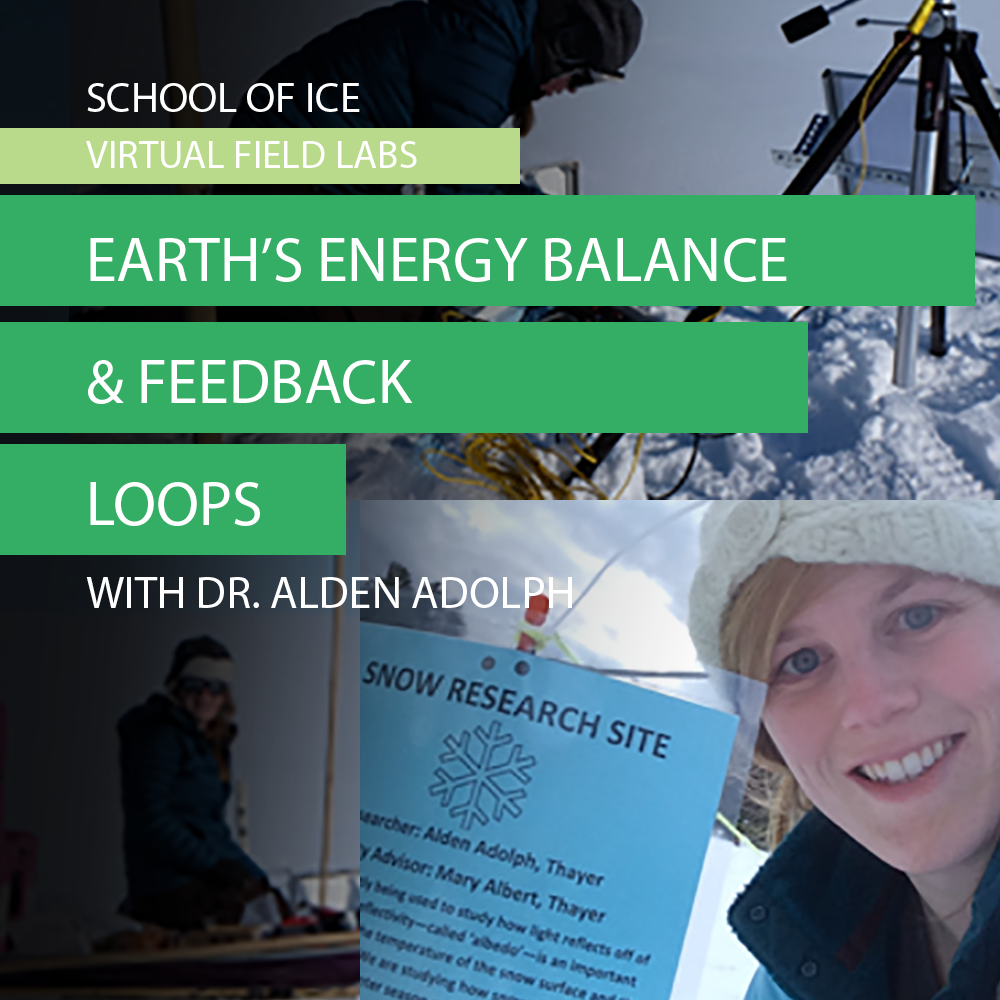
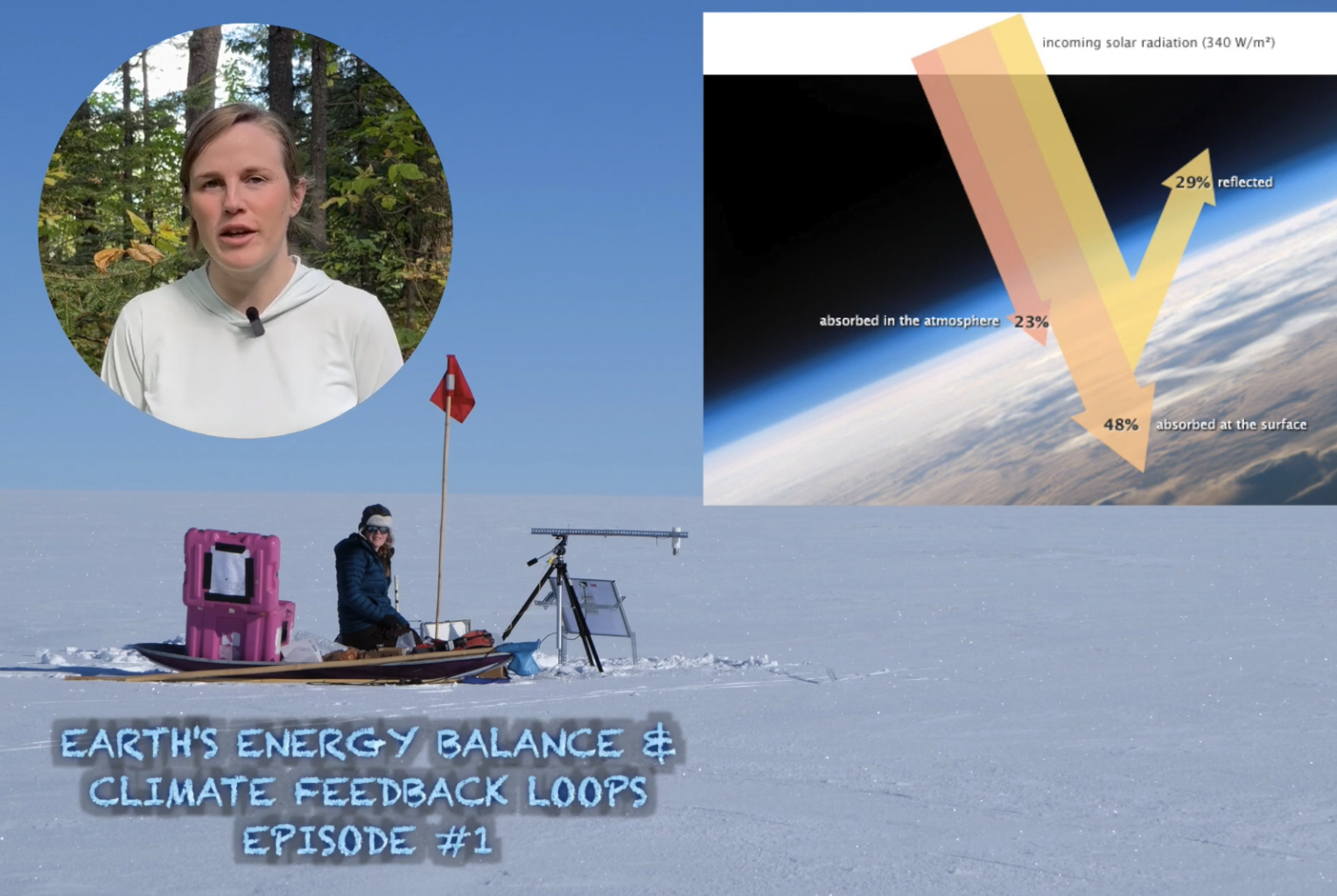
Episode 1 launches the Earth’s Energy Balance—Climate Feedback Loops series by taking students into the rapidly changing Arctic, where they explore how sea ice, oceans, and sunlight interact in one of the planet’s most sensitive regions. Guided by Dr. Alden Adolph, this episode sets the stage for understanding the powerful feedback loops shaping our warming world while also offering solutions and hope for the future.
Changes in Greenland Surface Melt Ponds
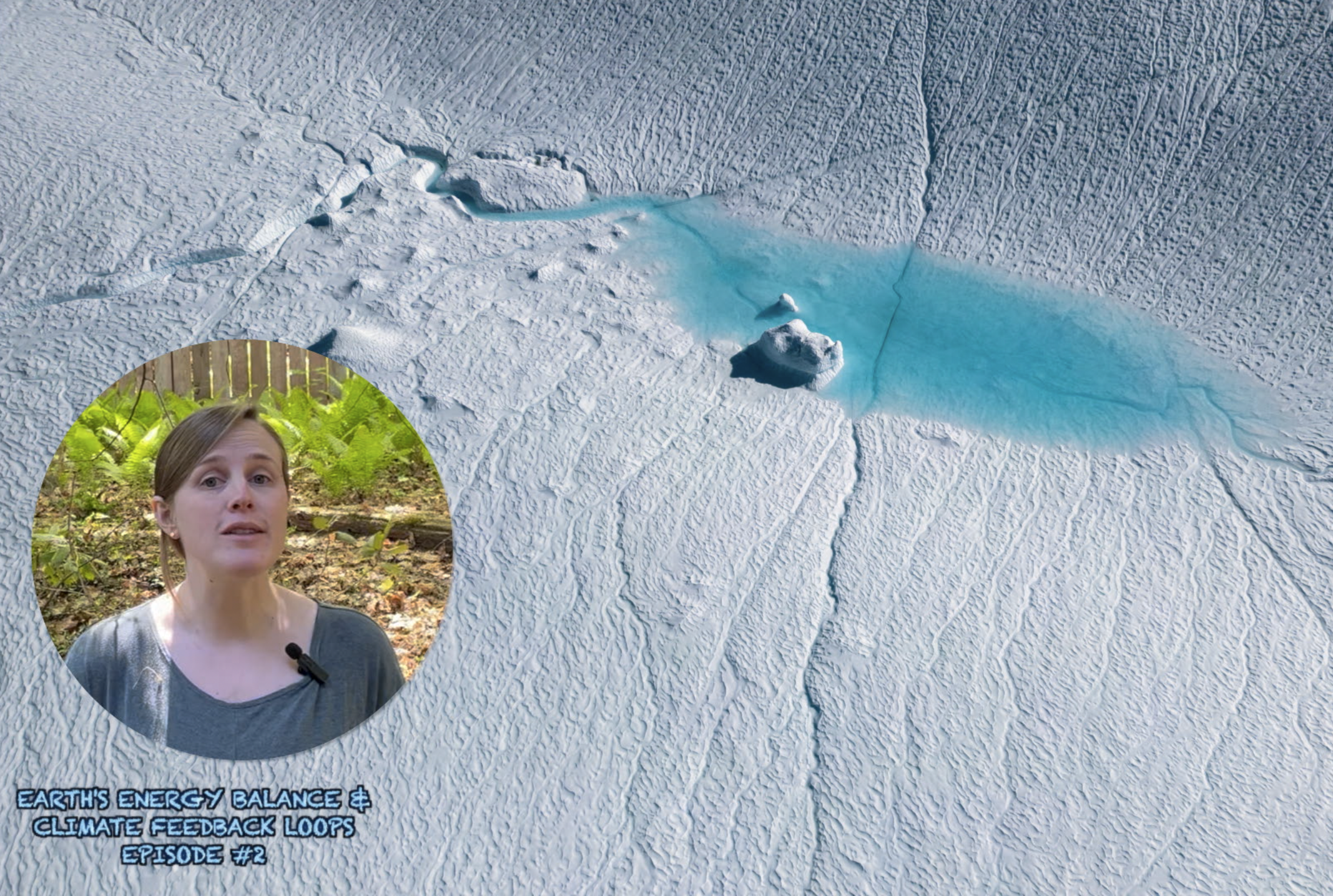
Episode 2 of Earth’s Energy Balance—Climate Feedback Loops takes students onto the Greenland Ice Sheet, where climate scientist Dr. Alden Adolph and student investigator Amy explore how melt ponds, albedo, and changing surface conditions can influence the planet’s energy budget. Through hands-on data analysis, students examine satellite imagery, elevation patterns, and greenhouse gas trends to uncover how even small changes on Greenland’s surface can ripple across the global climate system. The episode also continues the search for solutions that offer hope for a more balanced future.
Microscopic Changes in Greenland’s Snowy Surface
In Episode #3 of this virtual field lab, we zoom in even closer—this time to the tiny grains of snow and dust particles that can dramatically shift how much of the Sun’s energy the ice reflects or absorbs. Join climate scientist Dr, Alden Adolph and student investigator Amy as they uncover how subtle changes in snow crystal size and airborne dust can tip the planet’s energy balance in surprising ways. Along the way, we’ll explore emerging solutions—from reducing greenhouse gases to innovative energy alternatives—that may help us slow these powerful climate feedback loops and open new pathways for hope.